| |||

|
 |  | |
 |  | ||
 |
 | ||
 |  | ||
 |  | ||
| |||
|
|
| | |
| | ||
|
| ||
| | ||
|
| | ||



|
Planes, Trains, and Double-Deckers - Part 2: London, Galway, and HomeThis is a follow-up to Part 1, in which we planned for a trip to Ireland and London, and saw many interesting railroad-related sites on the east coast of Ireland. We also traveled extensively on the DART, the Dublin Area Rapid Transit system.Departure for LondonAfter several days in Greystones and the "greater Dublin area," we flew to London for a three-night trip. We traveled via Ryan Air, as mentioned earlier. We packed carefully, because of Ryan Air's strict carry-on luggage restrictions. As warned by the Ryan Air web page, we had printed out the internet boarding passes for both directions. When we checked in, though, they gave us boarding passes that were more like the old-fashioned punch-card passes, since it was an international flight. Overall, in spite of the hassle of getting through Ryan Air's online reservation site, getting onto Ryan Air at the airport was no more hassle than any airline to speak of. In other words, do your "homework" at home on your computer, pack according to their regulations, and your flight experience should be fine.Onboard, the plane was very clean and new-looking, even if you're used to beige seats instead of a bright yellow that would do McDonald's arches credit. Two tips about boarding:
Would I use them again? Definitely. Do I miss TWA? Most definitely. But I can't do anything about that. Train to London Gatwick is a few miles from London, but the "Gatwick Express" will get you quickly to Victoria Station, which is within a mile and a half of Buckham Palace, Westminster Abbey, Big Ben/Parliament, etc. Since we already had "reservations" on that Gatwick express, I "only" had to go to a kiosk and print out our "tickets." We were rushing to catch the next train so I didn't notice that what it printed out was actually one "Gatwick to London" ticket for 3, one "London to Gatwick" ticket for 3, and one receipt that also looked like a ticket. So I made the mistake of handing out what I thought were three one-way tickets. When the "ticket" I was holding didn't work, a station agent said, "Here, let me see that. Oh that's your receipt - this is the one you need." Then he ran the "London to Gatwick" ticket through the system, and we all got through the turnstile. Of course, I spent the next three-and-a-half days wondering whether we could use the "Gatwick to London" ticket to get back. As it turned out, the "London to Gatwick" ticket still worked fine, so my worrying was for nought. Gatwick is a few miles from London, but the "Gatwick Express" will get you quickly to Victoria Station, which is within a mile and a half of Buckham Palace, Westminster Abbey, Big Ben/Parliament, etc. Since we already had "reservations" on that Gatwick express, I "only" had to go to a kiosk and print out our "tickets." We were rushing to catch the next train so I didn't notice that what it printed out was actually one "Gatwick to London" ticket for 3, one "London to Gatwick" ticket for 3, and one receipt that also looked like a ticket. So I made the mistake of handing out what I thought were three one-way tickets. When the "ticket" I was holding didn't work, a station agent said, "Here, let me see that. Oh that's your receipt - this is the one you need." Then he ran the "London to Gatwick" ticket through the system, and we all got through the turnstile. Of course, I spent the next three-and-a-half days wondering whether we could use the "Gatwick to London" ticket to get back. As it turned out, the "London to Gatwick" ticket still worked fine, so my worrying was for nought.
The "Gatwick Express" is mostly above ground, but you don't see that much countryside before you start seeing the back lots of businesses and the back yards of houses whoosh by. Service is fast!. Victoria StationAt Victoria Station we disembarked and started looking for our B&B. We had a commercial street map of London that Molly's friend had loaned her. One of the fun things about London is that many of the streets change names every time they cross into another neighborhood. Still, the map was much more useful than all of the "free maps" you can pick up at the tourist traps, hotels, and train stations - more about that later.
One unexpected benefit of Victoria Station might be worth mentioning. Due to the "never knowing where you're going to come out" phenomenon, one evening we came out across from a theater that was showing Wicked, a show that Shelia had been wanting to see again. Molly ran to the box office and learned that they still had decent seats for a good price, so the three of us saw Wicked in London for less than one of us would have paid to get into any professional showing in the U.S. Cast, crew, orchestra, and scenery were all first class - in fact I could credibly assert that they were "world class." BelgraviaOur B&B was about three long blocks north of Victoria Station, and not that far from Buckingham Palace and several other worthwhile sites. We actually walked the fifteen blocks or so to Westminster Abbey once, though we tried to take the "Tube" or a bus after that.Belgravia is in what is called the "West End" of London. The nearest "Tube" station to our lodgings was at Victoria Station, so every trip involved a three block walk back there. We bought "Oyster Cards" which would allow us to travel all day long on the Tube and buses, for a flat rate, if we used them properly. The TubeMolly was a huge subway fan as a result of her success getting around by herself in Paris, so we use the "Tube" almost exclusively. Before we left the B&B, we'd check out the city map and the subway map, to determine which combination of trains would get us closest to where we needed to go.
Still, we had only one commercial map, so when we were planning an outing, we'd get out the good map, then write and draw all over one of the free maps so that we could be certain of our route. We went through about ten of the "free maps" that way, and by the end of the trip the "good map" was hanging together only by a thread. Still, without the "good map," we never would have found several things we wanted to see - they were either not shown, or shown on the wrong street! And you'd think that asking directions would "fill in the gap." Here's an irony: most of the people we encountered in public service - at hotel counters, cash registers, etc., are not Londoners, or even English by birth. Here's another irony, most home-grown Londoners are no more likely to give you useful directions than the recent immigrants. They mean well, but I think they're so familiar with the route that they overlook things, like a turn or two. Or in other cases, you might be asking them about things they have a vague knowledge about but no interest in, so they have some idea how to get there and do the best they can, but they really don't know for sure. Once, in frustration at apparently taking a wrong turn - on a British shop-keeper's advice - we stopped at a McDonalds for a snack. I asked several of the British looking-and-sounding employees for directions to the National Gallery. One gave directions that would have taken us north, one gave me directions that would have taken us east, and one gave me directions taken would have taken us west. Then I asked an employee who sounded as if she'd just arrived from New Delhi. She told me that the museum was only a block away to the south. In fact, when we followed her directions we realized that one of the museum buildings nearly backed up to the McDonalds we were standing in!
Back to the Tube Advantages: The Tube was fairly fast, the riders were almost all very polite, the stations were about as clean as you usually get on a big-city subway system, and it generally got us within a few blocks of where we wanted to go. Plus with our Oyster cards, we could get on and off as many times as we wanted in a single day, for a flat fee.
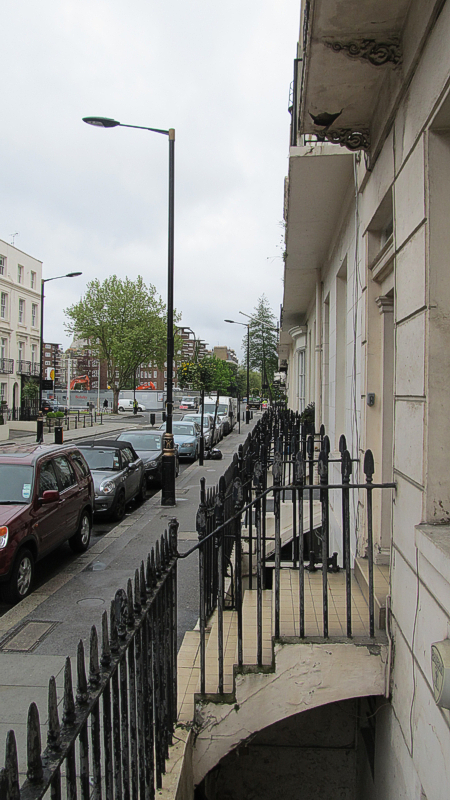
The BussesEven with the minor disadvantages described above (inaccurate surface maps, long underground passageways between trains, etc.), we had pretty much figured out the Tube after a few days. But it did become obvious that busses would have served us better on several trips - they would have picked us up closer to our starting point, and dropped us closer to our destination. The down side is that the bus maps are very complicated and they don't show where you stand to catch a particular bus.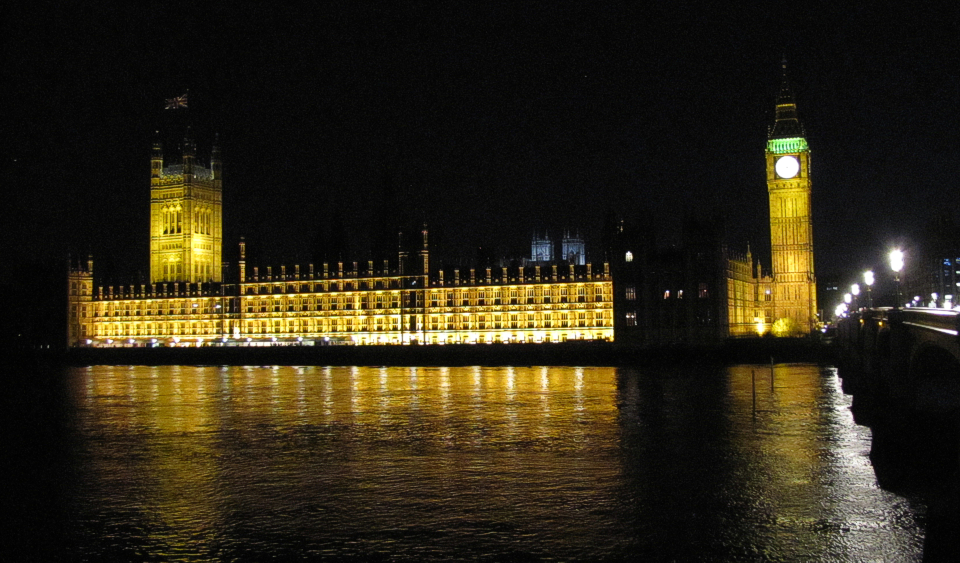 The map may show you that a bus you need comes down this street, but it doesn't show you where you need to catch it. The bus stop might be a block or more in either direction. If you're on a traffic circle or "circus," you might never find it. The map may show you that a bus you need comes down this street, but it doesn't show you where you need to catch it. The bus stop might be a block or more in either direction. If you're on a traffic circle or "circus," you might never find it.
In one case, when members of our party were just too tired to walk back to the subway and walk a half-mile underground to the train we needed, I sent them into a restaurant to grab a snack, while I walked up and down three city blocks looking for the bus stop for a bus that would get us where we wanted to go. After I found it, only a hundred yards or so from the restaurant, I went back and brought the rest of the group to the bus stop. My scouting expedition saved us a mile or so of walking. In fact, on that trip, we wound up getting off near Parliament to get some nighttime shots, then getting another bus back to Victoria Station. The short version is that the bus system is probably better for a lot of trips, but it's harder to figure out than the Tube when you're pressed for time. Back to Ireland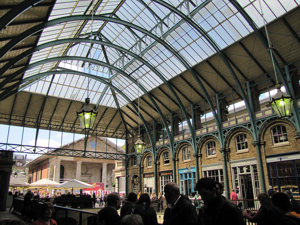 On our last day in London, we revisited the original Covent Garden (if you ever get there, be sure and see the Pollock Theatrical Toy store). Then we caught the Tube (which is very near at the corner of Long Acre and James) back to Victoria Station. I went downstairs to cash out our Oyster cards, which took about 40 minutes. It was worth it, though: I came home with about $45 worth of pounds that I otherwise would have had to "write off." On our last day in London, we revisited the original Covent Garden (if you ever get there, be sure and see the Pollock Theatrical Toy store). Then we caught the Tube (which is very near at the corner of Long Acre and James) back to Victoria Station. I went downstairs to cash out our Oyster cards, which took about 40 minutes. It was worth it, though: I came home with about $45 worth of pounds that I otherwise would have had to "write off."
Thankfully, the return tickets to Gatwick worked just fine. Airport security was smooth and fast, leaving us with well over an hour to our flight. It was disconcerting, though, to discover that nobody knew which gate our flight would come into/leave from. Apparently, Ryan Air uses whatever gates happen to be open at the time. About ten minutes before our flight was supposed to start boarding, they announced the gate, so we found it. Thankfully, Gatwick's airport is not large, so we didn't have to trek far. The flight was uneventful, if you don't count angry men arguing that they should be allowed to sit in the exit rows if no one else is there. Once we were at Dublin airport, we found the bus service that we were supposed to have used the first time we flew in. We bought round-trip tickets, since we were coming back to the airport in a few days. Here's where the other major transportation breakdown occurred. We asked the driver if he was going to Connolly station (from which we planned to catch the DART back to Greystones). He said, "sure."
A German couple sitting across from us obviously did not understand what the woman was saying. They kept asking her questions in German and she kept saying the same thing over and over again in English. Finally she went back downstairs (I think she got off the bus, but from upstairs, you couldn't tell). A few minutes later the Germans got off. A full half-hour after the bus stopped, it started again - apparently the new driver was onboard. The bus took us past several stops that weren't on the route diagram, then stopped in a parking lot. The driver said, "This is the end of the line," and got out. We rushed downstairs, grabbed our carry-ons, and said, "You were supposed to take us to Connolly Station." The driver said, "If you wanted to go to Connolly station, you should have got off on such-and-such a corner and walked over." "How do we get to Connolly Station?" "You can't. My shift is over, and this is the last bus going anywhere." By then it was getting dark, and we were afraid of getting stranded overnight at what was basically a bus garage in no-man's land. We rushed to another bus and found a lady driver who had also just ended her shift. After several minutes, she agreed to drive us to Connolly Station. I hope she didn't get in trouble, but we were getting a little nervous. Again it didn't cost us anything but time - we arrived at Greystones over two hours after we should have. It was well after dark and we hadn't eaten for about nine hours. Unlike the DART Malahide/Howth mixup, this was a private company's screw-up, though. To be fair, another bus and driver from the same bus service got us back to the airport without incident a few days later.
One of Molly's friends wanted to see Galway again before she left Ireland, so we got reservations on the same bus tour. To catch the bus, we had to take the earliest DART train to Pearse station, and literally run to Grafton street - there was only some 15 minutes between the train's arrival at Pearse and the tour bus' scheduled departure.
|
|
| 
|
|
 |
|
 |
 |
Note: Family Garden TrainsTM, Garden Train StoreTM, Big Christmas TrainsTM, BIG Indoor TrainsTM, and BIG Train StoreTM are trademarks of Breakthrough Communications (www.btcomm.com). All information, data, text, and illustrations on this web site are Copyright (c) 1999, 2000, 2001, 2002, 2003, 2004, 2005, 2006, 2007, 2008, 2009, 2010, 2011, 2012, 2013 by Paul D. Race. Reuse or republication without prior written permission is specifically
forbidden.
Family Garden Trains is a participant in the Amazon Services LLC Associates Program, an affiliate advertising program designed to provide a means for sites to earn advertising fees by advertising and linking to amazon.com.
For more information, please contact us

 |  |


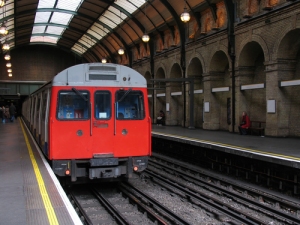

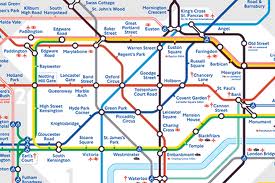 - the part of London's Tube that serves the "West End" resembles a short ladder laying on its side, with things streaming off of it in several directions. Though it served (more or less) most of the places we wanted to be, there were times it took us two or three trains to get there.
 That said, there were two disadvantages: