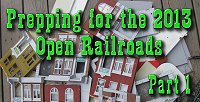
While we do the work and rework necessary to prepare for our open railroads this year, I'm keeping a sort of photo journal of everything we do. Ironically, some of the photos we've taken recently will be working their way back into articles about the original projects we did years ago, because they illustrate what we should have done in the first place. But many of the photos just apply to rework - so those are going into this article and its sequels, hopefully as an inspiration to anyone else who has got seriously "behind the curve" with their garden railroad maintenance.
If you want to see what we've been up to plus get some ideas for how you may refurbish - or furbish - aspects of your garden railroad, please click on the following link:
By now, many of you have your garden railroads ready and running for 2013. But in case you don't here are some ideas for making sure your track is ready before you get your trains out and risk damage (or at least poor operation).
First, perform a spring track inspection and cleanup.
Get the following materials together:
- Whatever you are using for ballast, including some in a bucket you can easily drag around with you.
- Trowel
- Dandelion puller/digger/fork (these are called different names in different parts of the country, but you know what I mean. For this job, try to get one you can use while kneeling down)
- Large bin or other container you can toss weeds at as you work
- Another bin or other container you can toss plants that you may want to replant elsewhere as you work
- Track-cleaning block or very fine sanding block for scouring the track
- A very short level for checking the track level side-by-side
- A slightly longer level (18" is good) for checking the "grade" of the track
- A whisk broom or other stiff-needled broom you can use to smooth ballast and sweep things off.
- A car you can push around for a visual check of the track. It should be about as long as most of the cars you run, and it shouldn't rock back and forth on the trucks. If possible it should have metal wheels that roll smoothly on good track.
For many people it works best if they work in one area at a time, moving on when that section is ready. Others would rather make several circuits, working on one thing at a time. Whatever you do, take your dandelion puller with you each time you go around the track, so if you spot a dandelion or thistle, you won't be tempted to just break it off and cause bigger problems (literally) later. The following procedure works for me.
- Remove any weeds you see (this may take longer than anything else).
- Then remove or cut back any "good plants" that are overgrowing or overhanging the track.
- Clean the top and inside edge of each rail, removing pebbles or other obstructions caught in your switches or rerailers.
- Look for places where the track connectors are loose or falling apart.
- If you are using track power, look for places where jumper lines or other electrical connections may be failing or in danger of failing.
- Look for left-to-right kinks in the track.
- Check the track level left to right, If your track is "floating" in ballast, you can usually adjust that by adding a little extra ballast here and there.
- Check the track grade, and check for vertical kinks to make certain a washout hasn't turned part of your track into a roller coaster.
- With a series of light taps, push your car around the track portion you have just cleared and cleaned. Look for places where the car binds, rocks, or slows down.
- Once you have done each section of your railroad, get the smallest, least expensive locomotive you own and send it around the track. This may sound silly, but sometimes things have changed that you can't see, like a tunnel brace dropping a half inch and no longer providing enough clearance.
- Finally, test something big and fun to run. Relax and have a cold beverage while you watch the trains for a bit. Okay, now it's time to start trying to remember where you stashed your buildings and little people.
Then have some friends and family over and start having a great summer.
As I mentioned last month, there used to be a tradition in some garden railroading circles to have an open house on the Sunday closest to the summer Solstice (June 20 or 21). Though celebrating "G day" is less common today, it's a nice target to encourage you to get things cleaned up and running early.
National Garden Railway Convention is Weeks Away!
Note: This section and the next two are "re-runs" from last month, but they're still relevant, so we're leaving them in, in case you didn't see them.
As you may know by now, the National Garden Railway Convention will be near Cincinnati Ohio on June 5-9 this year. That's as close as the convention ever gets to my house (although we're still about 70 miles away).
We're hoping to see lots of our internet friends, so if you're coming at all, please let us know so we can keep an eye out for you.
If the rest of your family isn't sure this is the best way to spend your vacation, remind them that
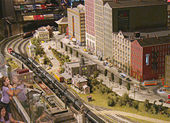
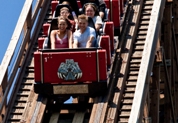 this area has lots of local features you won't get anywhere else. For example the site is next door to Kings Island theme park and water park, and only a few miles from the world's largest indoor Large Scale Railroad at EnterTrainment Junction - so there's plenty for the family to do, even if you're not all "train nuts."
On a more personal note, Paul is providing four garden railroading clinics, and we'll have our own railroad, the New Boston and Donnels Creek open for visitors. The links to our clinics and open railroad schedules are in the next two sections.
You've read the articles; come see the presentations! Family Garden Trains' most popular articles will come to life in our clinics. We can't cover everything, but we'll bring lots of examples and be on hand to answer questions as well. Besides me, at least two popular Garden Railways staff members will be presenting their own clinics, plus there will be a lot of regional folks who have skills that, frankly, deserve national attention.
For more specific information about the clinics we are currently planning to present, please click on the following link:
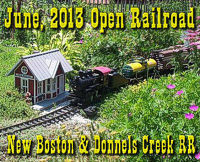 Come to See Our Railroads
The New Boston and Donnels Creek RR, along with several great area RRs will be open on Friday morning as part of the tour of the Miami Valley Garden Railway Society's open railroads. If you're planning to hop the bus or drive over, 












 Prepping for the 2013 Open Railroads
Part 1
Prepping for the 2013 Open Railroads
Part 1 Introduction to Craftcutters
 Trashbashing 101 - Updated for 2013
 Come to See Our Clinics